Why an addition gives itself away (and how matching trim fixes it)
By Figueiredo Carpenter & Custom Builder · · 3 minute read
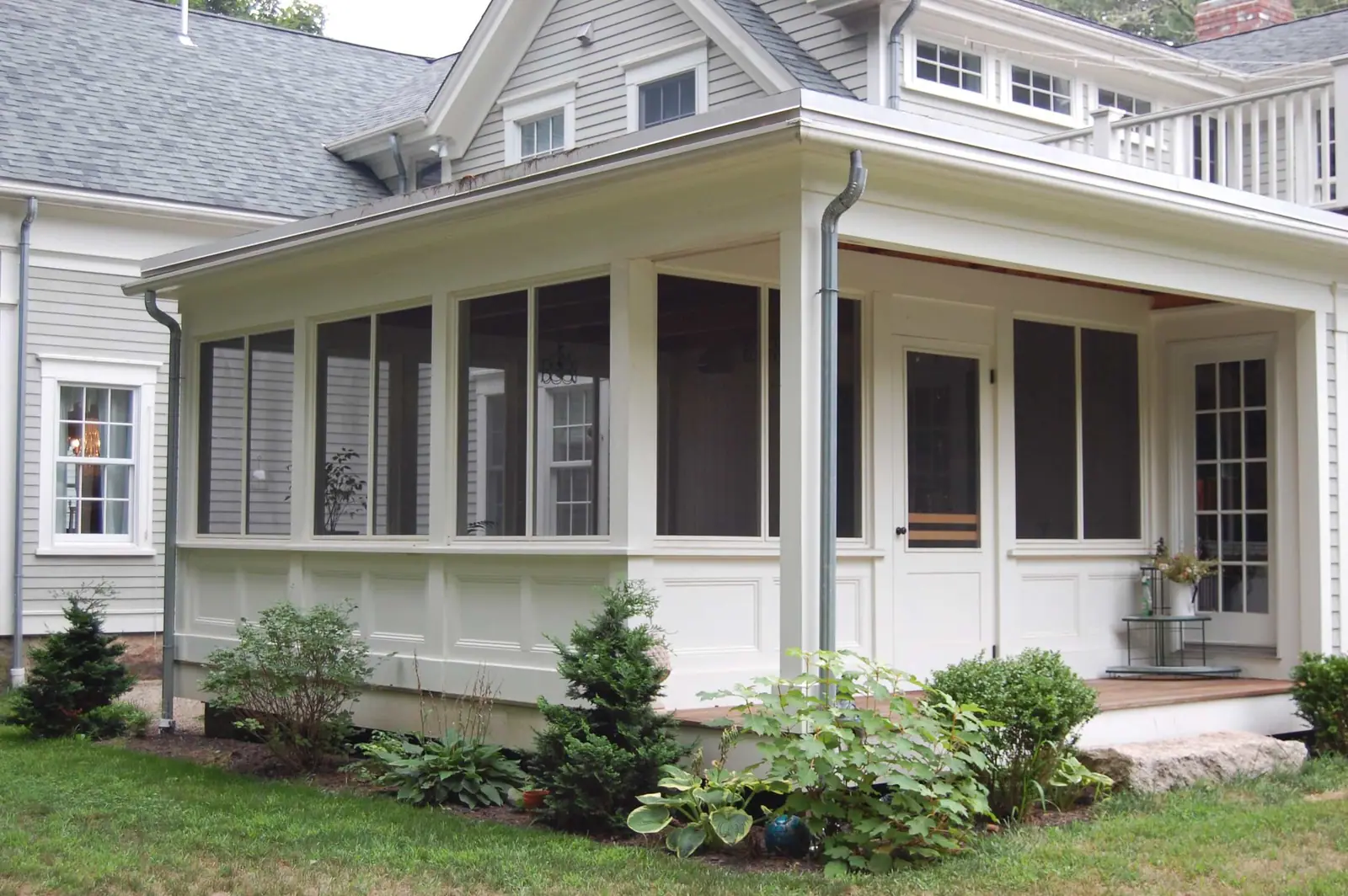
An addition gives itself away in three places: the roofline, the exterior trim and the interior mouldings. Match the roof pitch and overhang, match the corner boards and shingle exposure, and run the inside trim to the same profiles as the old rooms, and the new part reads as part of the house. Miss any one of them and you get the addition that looks like it was parked next to the house and left there.
The old Figueiredo website put the goal well: additions "as to seem like it was always there." Here's how that works in practice.
Outside: the roof and the corners
The eye reads a house from its outline first. If the new roof is steeper or shallower than the old one, or its eaves stick out further, the join shows from the street before anyone notices the windows.
So we start with three measurements from the existing house:
- Roof pitch, so the new roof sits in the same family as the old one
- Overhang, at the eaves and the rakes
- Shingle exposure and corner boards, because a 5-inch course next to a 7-inch one is obvious from the car
On the South Coast, most of those houses are shingled, which helps. Cedar shingles weather to the same grey in a few seasons. Trim doesn't weather into matching, though.
Inside: the mouldings
Inside, the giveaway is the trim. Walk from an 1840s parlour into a new family room and the door casing changes from a deep, shadowy profile to something flat from a lumberyard. Most people couldn't say what changed. They just feel it.
A moulding profile is a sequence of small shapes, each with a name. A bead is a small half-round. An ogee is an S-curve, part hollow and part round. A fillet is a little flat step between them. A cove is a hollow quarter-round. Old casings and crowns combine those in particular proportions, and the proportions changed with the decades.
| Shape | What it looks like | Where you see it |
|---|---|---|
| Bead | A small half-round | Casing edges, beadboard, paneling |
| Ogee | An S-curve, hollow then round | Crown, base caps, mantels |
| Fillet | A small flat step | Between curves in almost every profile |
| Cove | A hollow quarter-round | Crown and bed mouldings |
To match old trim, you need a cutter that makes that exact sequence. That is why Tom has spent since 1980 collecting traditional moulding profiles. There are more than 50 in the shop now, some over a century old, and our in-house shop can run new ones when the house needs something the rack doesn't have.
Cabinets count too
Kitchens and baths are often the reason for an addition. A run of flat-packed cabinets in a room trimmed like the 1800s looks exactly as odd as you would expect. Our shop builds cabinets and built-ins to the same profiles as the trim. Store-bought cabinets are mostly held together with glue; ours are fastened properly and built to last.
What it costs
Matching trim costs a little more than buying whatever the lumberyard has in stock. The old site's line still holds: custom carpentry "only cost slightly more than the shoddy, premade products." On an addition you will live with for decades, it's the cheapest part of getting it right.
If you are planning an addition in Marion, Mattapoisett, Rochester or nearby, see our additions work or book a walk-through. If you can, keep a short offcut of your old trim. It saves Tom a trip up a ladder.